Human-AI teaming
Designs studies and measures of trust, situation awareness, and coordination in human-AI teams. Turns the results into roles, workflows, and training that help teams adopt new technologies effectively.
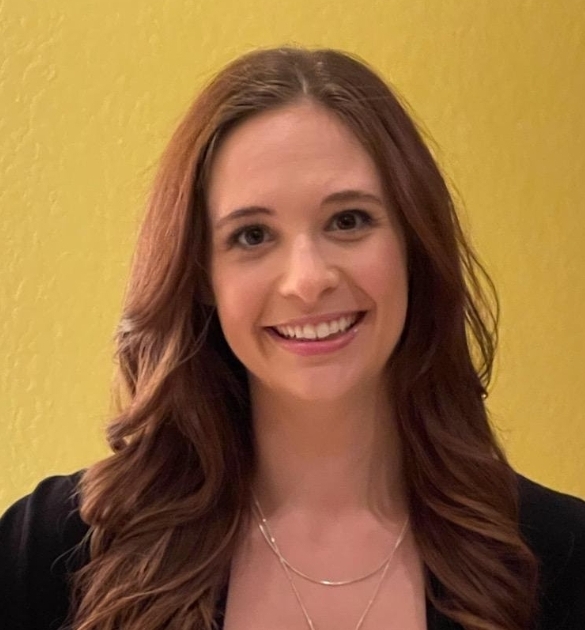
Samantha Dubrow leads human-in-the-loop experiments and wargames that put AI-enabled and autonomous systems in the hands of real operators before they are fielded. She manages multidisciplinary programs for Department of War and Department of Homeland Security sponsors and serves as Principal Investigator on AI for next-generation wargaming. Her work helps leaders decide how to integrate new technologies into organizations for specific missions.
Connecting research, experimentation, and program management
Designs studies and measures of trust, situation awareness, and coordination in human-AI teams. Turns the results into roles, workflows, and training that help teams adopt new technologies effectively.
Designs and runs tabletop exercises, wargames, simulation experiments (SIMEXs), and live, virtual, and constructive (LVC) exercises with real operators. Gives leaders evidence about how a technology performs with people before they decide what to field, fix, or drop.
Manages multidisciplinary teams and research portfolios for defense and homeland security sponsors. Scopes sponsor needs, delivers on schedule, and briefs senior leaders on recommendations they can act on.
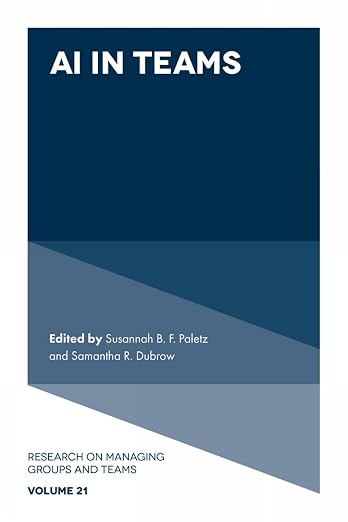
An edited volume on how artificial intelligence is changing the way teams form, coordinate, and perform. The book brings together researchers studying human-AI teaming across fields.
Dr. Samantha Dubrow is the Simulation Experiment (SIMEX) Program Manager at The MITRE Corporation. In this role, she leads a multidisciplinary team directing human-in-the-loop experimentation to help Department of War and DHS operators design, evaluate, and establish operational concepts for emerging technologies prior to fielding. Her portfolio centers on human-machine interaction, autonomous systems, and advanced simulation environments, and she serves as Principal Investigator developing AI capabilities for next-generation wargaming.
Samantha earned her PhD in Industrial-Organizational Psychology from George Mason University. Her research investigates human-AI teaming, multiteam systems, situation awareness, and trust dynamics in complex settings. She is the co-editor of the academic volume AI in Teams and has served in multiple external leadership roles, including on the Executive Board for INGRoup, as Deputy Chair of the I/ITSEC Human Performance Analysis and Engineering Subcommittee, and as an Industry and Scientific Advisor across defense and academic consortia.
Highlights from Samantha's research
AI in Teams
Paletz, S. B. F., & Dubrow, S. R. (Eds.). Research on Managing Groups and Teams, Vol. 21. Emerald Publishing.
Spot report: An open-source and real-time secondary task for human-robot interaction user experiments
Ali, A., Banerjee, R., Jo, W., Riegner, K., Smereka, J. M., Dubrow, S., Robert, L. P., & Tilbury, D. M. Human-Robot Interaction.
RFID sensing and analytics to improve team training
Dubrow, S., Fine, M., Colder, B., Noor, A., & Santago, A. Interservice/Industry Training, Simulation and Education Conference (I/ITSEC).
Promises and trust repair in UGVs
Esterwood, C., Ali, A., George, Z., Dubrow, S., Smereka, J., Riegner, K., … & Robert, L. P., Jr. Proceedings of the Human Factors and Ergonomics Society Annual Meeting.
Reimagining situation awareness and option awareness for human-machine teaming
Drury, J. L., Klein, G. L., Booker, L., Ryall, K., & Dubrow, S. IEEE CogSIMA.
Human-machine teaming: What skills do the humans need?
Dubrow, S., & Orvis, K. L. Interservice/Industry Training, Simulation and Education Conference (I/ITSEC).
Multiteam systems: An integrated review and comparison of different forms
Zaccaro, S. J., Dubrow, S., Torres, E. M., & Campbell, L. N. Annual Review of Organizational Psychology and Organizational Behavior, 7, 479–503.
Samantha welcomes invitations for panels, podcasts, keynotes, and workshops on human-AI teaming and experimentation.